All the charts and data we refer to can be found on the Yacht Club page.
Hey everyone,
Last weekend, we spent the whole
note talking about how outsourcing our "trade ideas" process to our platform tends to result in extremely profitable wins, whereas when we try to come up with ideas
ourselves, we lose money.
(Which is to say, "You should not listen to us.")
Anyway—the cherry on top is that after detailing months of trades that worked (and didn't), we threw out three offhand ideas that we got from skimming the Ideas page:
If we extend this lesson—and we probably should—the right thing to do this coming week is to just buy some small amount of SPX and shut up. Or go to the Ideas page and consider the virtues of Sandisk (ew, but whatever), Uranium (huh... maybe), or Rare Earths (seems pretty appropriate right now, actually).
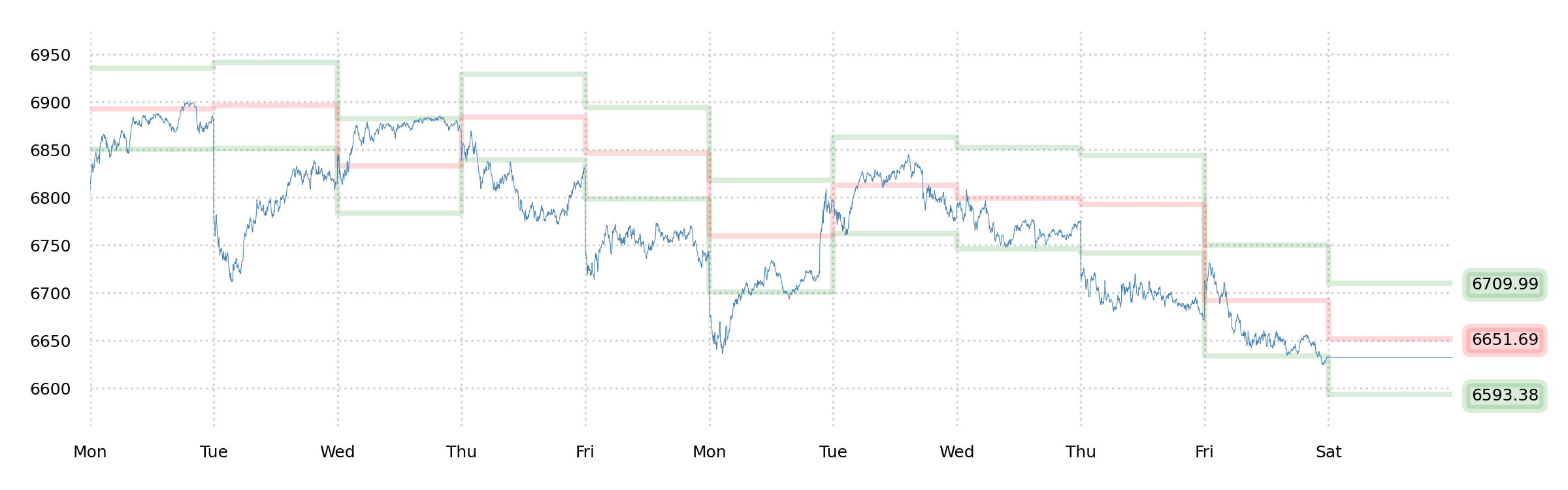
The S&P 500 is down 1.60%. But those three?
- SNDK +25%
- URA +1%
- USAR +11%
And so today, we're going to talk more about this broad phenomenon of choosing the game we play.
Because it's really easy to get caught up thinking that you have to have an opinion on world events, and to trade that opinion. And that's very not true.
But first...
- Bounce (and calls)
- Falling Up (and calls)
- Play Stupid Games (and calls)
Bounce (and calls)
Last Sunday, we
said we should get some long SPX delta.
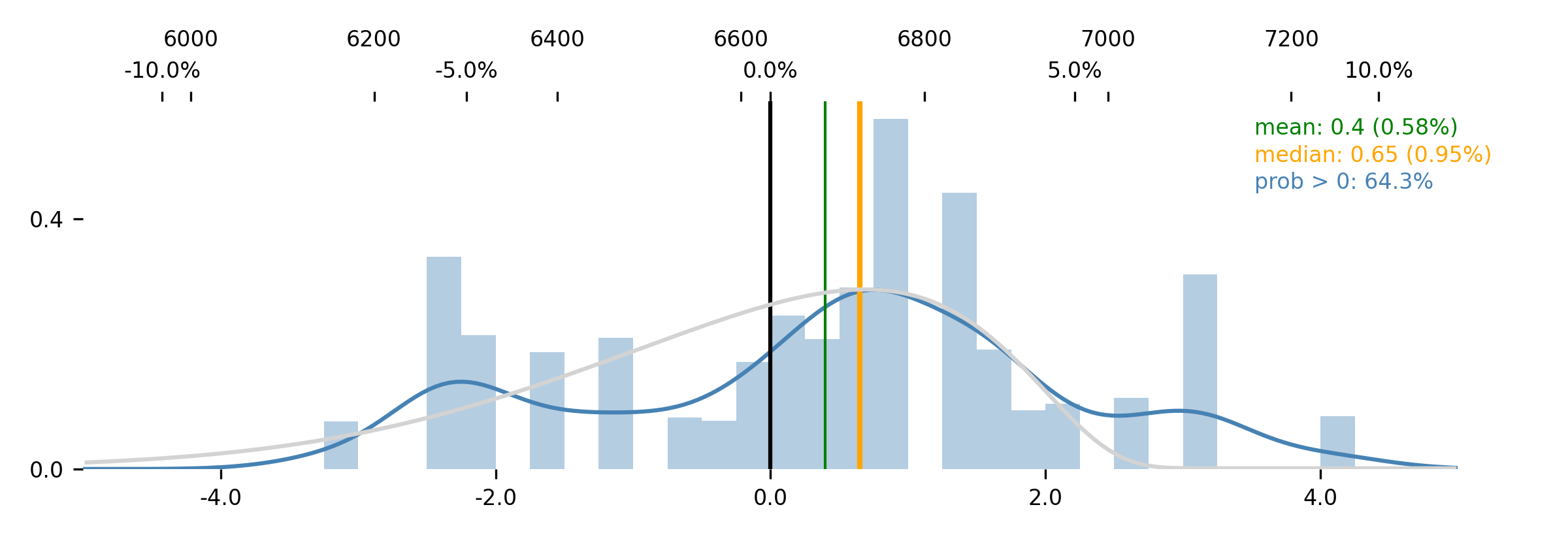
It's unquestionably a bullish distribution, and the advantage is on betting on a face-ripping horror-show of a rally. A mean-reversion, with extra juice from high implied vol. The probability of upside is 72.8%. The mean 1-week return is 1.66%.
But after returning nearly 1.5% from open to close on Monday, we got cold feet, and started easing up. Then, on Tuesday, we
resolved to swap what remained of our long E-minis for long OTM calls. Good timing.
Those OTM calls haven't done well, of course. But that's fairly inconsequential in light of the delta PnL from Monday—and we're pretty happy with that outcome.
Now what?
Falling Up (and calls)
Nothing changed, really.
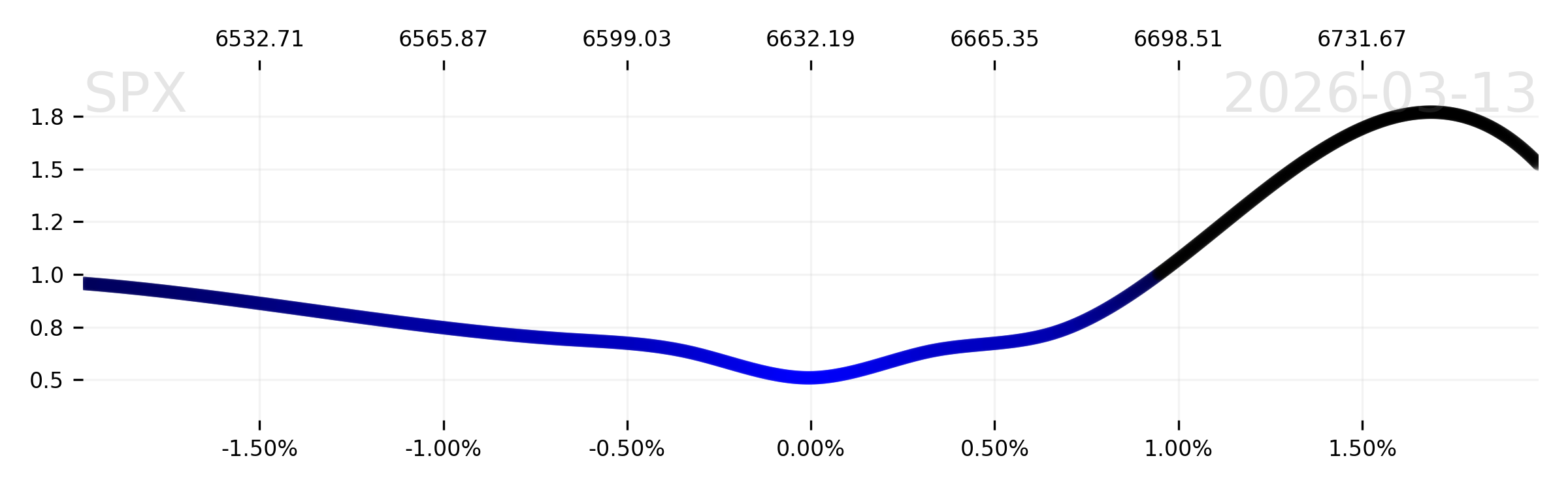
There's still a small advantage in betting on that far right tail. What's more, it appears from the step-forward that Jim will get more bullish in the event of upside.
And so, just like we thought it would be foolish to not carry some long delta into the beginning of last week, we think it would be foolish to not carry some long upside convexity into the beginning of this week.
Two particularly interesting data points: (a) RISC and (b) NPD.
(a) RISC
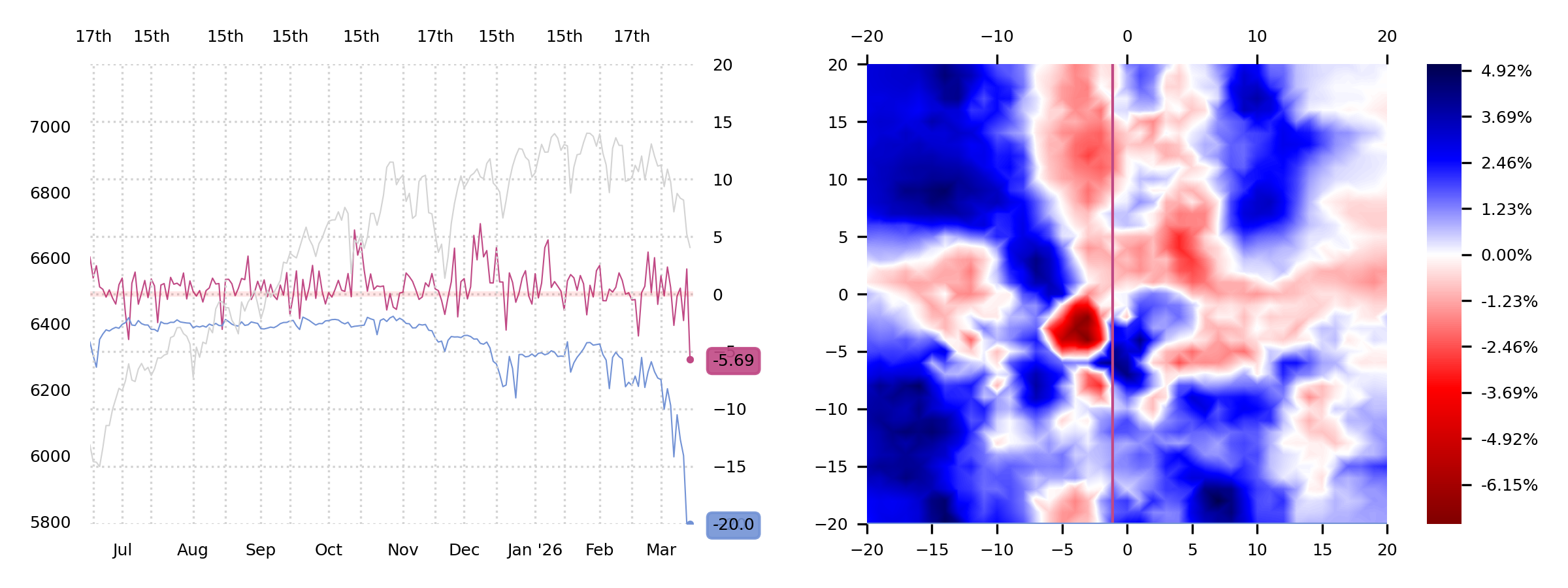
This is one of the strongest signals in the S&P 500, and it's decidedly bullish right now. A RISC of –50 means that 1-month realized daily moves are 0.50% less, on average, than what's implied by 1-month ATM SPX options. In other words, the market is implying big moves, but nothing resembling a big move has yet occurred.
A good way to get a sense for what this means, and how it's felt in the past, is to head to the
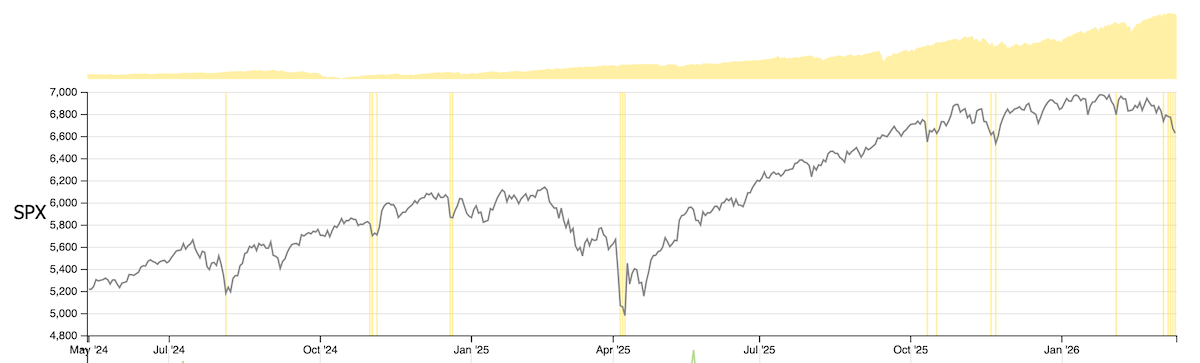
S&P 500 Chart and click-and-drag on the RISC (R) scatterplot. You can quickly see what occurred in similarly "low RISC" situations over the past couple years.
It's a genuinely strong signal.
(b) NPD
The SPX option market has matured a lot in the past decade, and that means some of our traditional sources of edge have all but disappeared. We won't even put NPD (SPX Net Put Delta) in our nearest-neighbor models anymore (Jim doesn't even look at it), since it so infrequently demonstrates any signal.
Still... Friday's anecdata is fascinating.
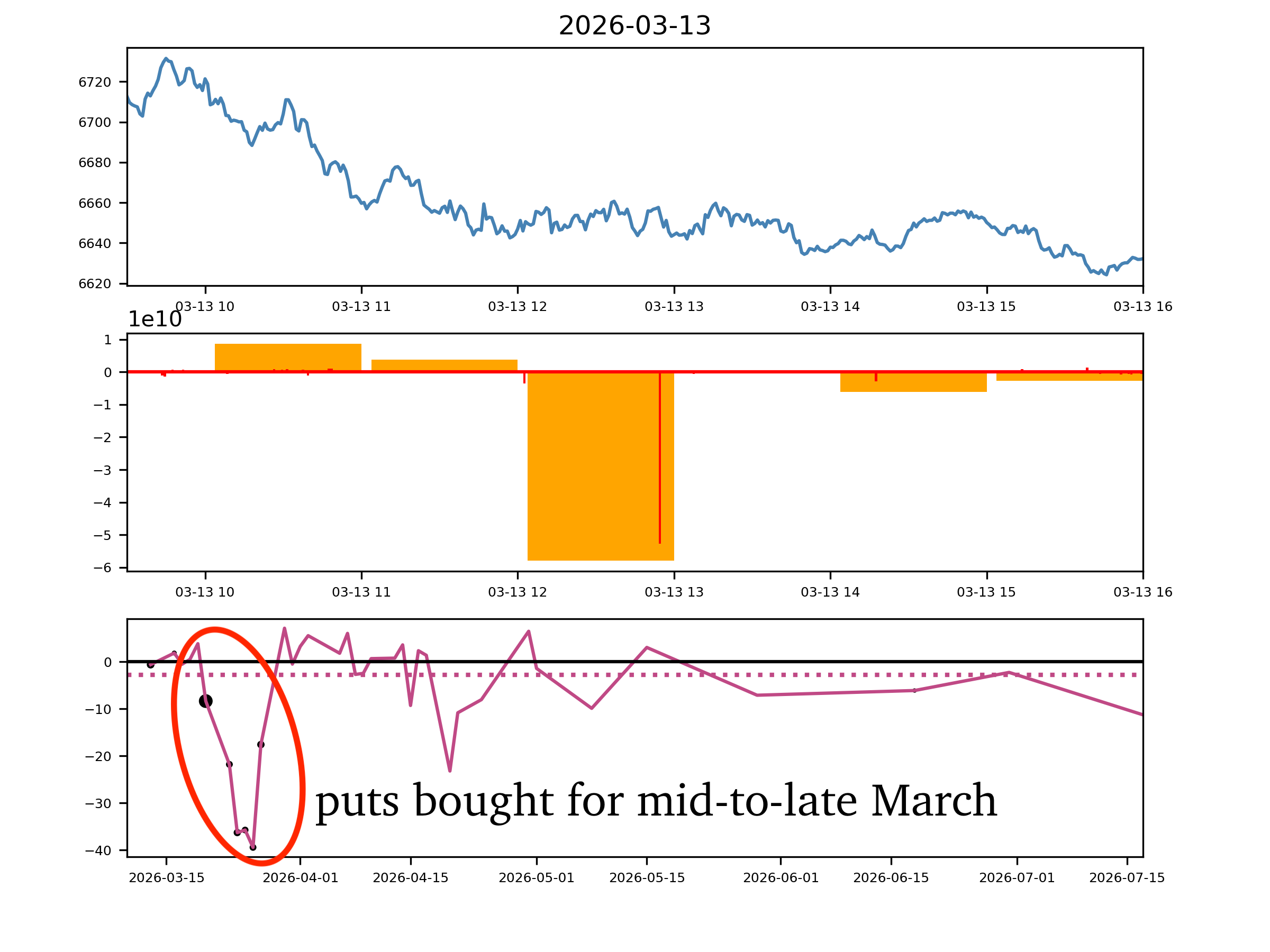
An NPD of –5.69 means that there was a fair amount of put-buying on Friday. More put-buying than you've seen in recent history. Where did that put-buying occur?
Puts appear to have been bought for expirations across the next one-and-a-half weeks. Very unusual, nowadays, when most volume occurs at 0DTE and 1DTE. This positioning is almost certainly a stabilizing force to the index, from both the customer (who is insured) and dealer (who will buy back deltas) side.
Is this time different? Maybe. But we don't really care if it's different, because the "right" answer is still to be long some OTM calls.
Play stupid games (and calls)
Speaking of just being long some OTM calls, let's talk about one of the best S&P 500 trades we ever made.
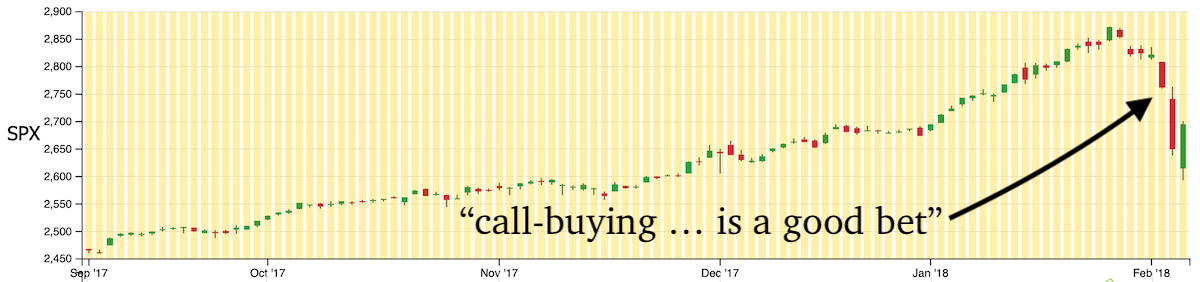
It was Sunday, February 4th, 2018. The index had just undergone what we'd described as a "freakish climb into the stratosphere," and we were watching as VIX ticked up toward 18, after having been stuck under ten.
But despite being the highest it had been since 2016, a VIX around 18 was still obviously too low given the circumstances. We knew this because our [relatively primitive] GEX model predicted 1-week volatility realizing over 25. Which, for the model at the time, was incredibly high. This was crazy-looking stuff.
In our note for the week (eight years ago!), we resolved... to buy calls:
And to put that standard deviation in more familiar terms, it implies a 5-day volatility of 25.5%, or a 30-calendar-day volatility of 22.8% (to a current VIX under 18). This is actually almost as volatile as things can ever get. Options are, of course, currently not pricing in this degree of volatility, nor are options pricing the upside bias. Hence, call-buying on its own is a good bet, and legging into a bull spread is a good bet as well. (Especially if we're lucky enough to open down further tomorrow!)
The calls expired worthless, of course, and the next few days became known as "Volmageddon." Billions of dollars were lost, scandals cropped up, and the short-index-vol trade never fully recovered.
We did not benefit from it at all.
But, more importantly, we were not hurt by it either.
Long-only S&P was hurt. Short S&P vol was murdered. But for us, it was just another day of somewhat disappointing PnL. And the reason it was a ho-hum experience was that we chose to be long calls in a long-vol-opportunity environment with a fixed maximum loss.
And we still stand by the decision—because it was a good bet! Maybe we could have predicted that the XIV ETF would go belly-up and spike VIX eventually, but we couldn't have predicted it would happen that Monday instead of the next one, or the one after that. Instead, constrained by the reality of the situation, we bought calls, which were wildly cheap, and we let the chips fall as they may.
The current situation is similar, and we think that the lesson is similar: You don't have to hold, or act on, a strong opinion. You can, if it seems appropriate, just take small, fixed-risk bets on apparently underpriced outcomes, and you're not going to be terribly disappointed in the result. Indeed—in the long run—you'll do very well this way.
But let's also extend this line of thinking, if only for a moment: In the same way that you're very much allowed to choose-your-own-adventure when it comes to expressing your edge in SPX, you're also allowed to choose no-adventure-at-all.
The S&P 500 is a ridiculous market, incredibly complex, huge, sophisticated, vast, uncaring, faceless, a god of our own creation. Your capitalist brethren burn supplications at the altar of this god, and they are rewarded with the sameness and safety of the collective 401(k) return. The collective defined contribution retirement plan of the middle class and the inflation-protection (and tax-avoidance) scheme for the wealthy. But you needn't burn incense at the altar of this index! You needn't take comfort in the warm bosom of similitude!
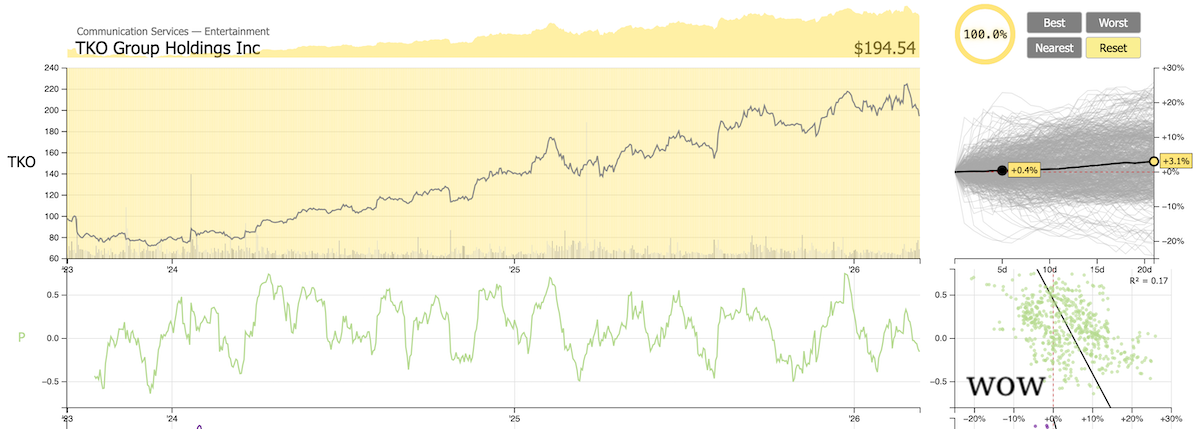
We've been making the point for the last couple weeks now that stupidly sifting through our Ideas page has offered staggeringly superior returns to playing in the index—and we like to think we're pretty good at playing in the index! So if you're going to spend all this time reading market missives like this one, consider—particularly at this worrying juncture—the virtues of playing a totally different game and eschewing the index. Play stupid games.
Simply put, other markets are much less mature than SPX. Has anyone here been trading oil lately? (We're guilty of trading a bit.) Its minute-to-minute volume contains a great deal of information! Reversals follow high volume. Why? Because commodities, generally, are traded for their momentum (think CTAs), using moving averages of varying complexity. In a market like this, mean-reversion is an open playing field. There aren't "dip-buyers" in oil, but sometimes it makes sense to buy the dip!
And oil is a mature market compared to others! Other commodities have more obvious signals, and many single-name stocks are more obvious still. And nobody cares that these tickers obey the simplest patterns with respect to the simplest aspects of price-action!
But you care, dear reader. Because while you enjoy the intellectual challenges that the market offers you, you also enjoy a bit of coin and some leisure time.
So don't get too caught up in the fuss and the bluster and the macro and the geopolitics and the grand strategy. Sometimes it's smarter to be stupid.
Long some calls. Easy, breezy, beautiful.
Enjoy the week!
The SqueezeMetrics Team