All the charts and data we refer to can be found on the Yacht Club page.
Hey guys,
Unchanged. Everything is unchanged.
You would receive just as much information by staring at the wall for the next four minutes as you would by reading what follows.
- Last Week
- Next Week
- Science is Boring
Last Week
Last weekend, we finally came around to the idea of "buying a put." And we liked the idea of an end-of-month option, something in the 20-delta area, with a mind to benefit from both delta and vega gains, and to have time for our bearish lean to play out.
Because despite our increasingly bearish outlook, Robot Jim has just shrugged—meaning that he's not too keen on betting on near-term losses for SPX. For weeks now, he's simply told us that we have no edge, and would be better off going on vacation. To his credit, he's been right. To our credit, we've mostly listened.
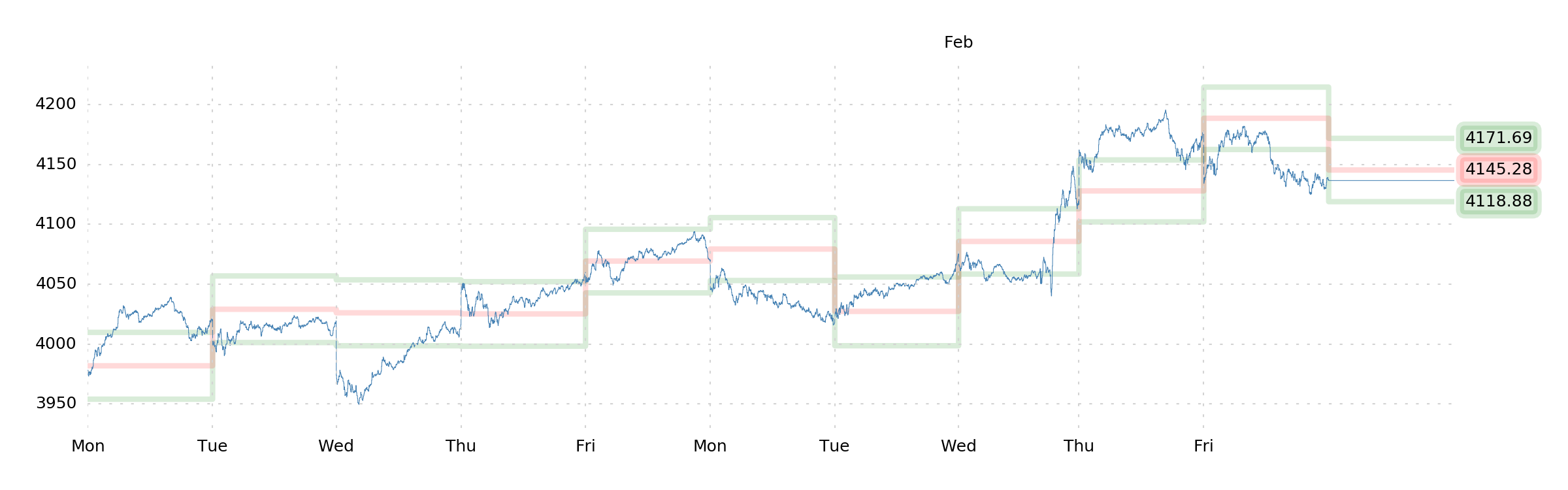
The week was a mix of an unintelligible Powell, relentless bullish flows, and marginally higher prices. DIX continues to print over 50%. Tesla is up 75% year-to-date.
But while people are ostensibly keen on getting back on the S&P bull train, it's still a "mincing bullishness; a fleeting, nihilistic, non-committal bullishness that will run scared if things don't turn out well." This is evident in the call-buying behavior, and in the lack of put-buying behavior. People want lottery tickets, but not insurance.
Bull markets don't work this way. This is not a bull market. Bring us back those committed put-buyers, insuring their long-term S&P exposure, and you can have your bull market back. Until then...
So, anyway, we ended up buying that put on Monday morning. And then we bought more on Thursday. It's meaningful exposure now. All puts expire at end-of-month.
Same, same, same.
Next Week
Jim just won't cooperate with our beary ambitions. Same as last weekend.
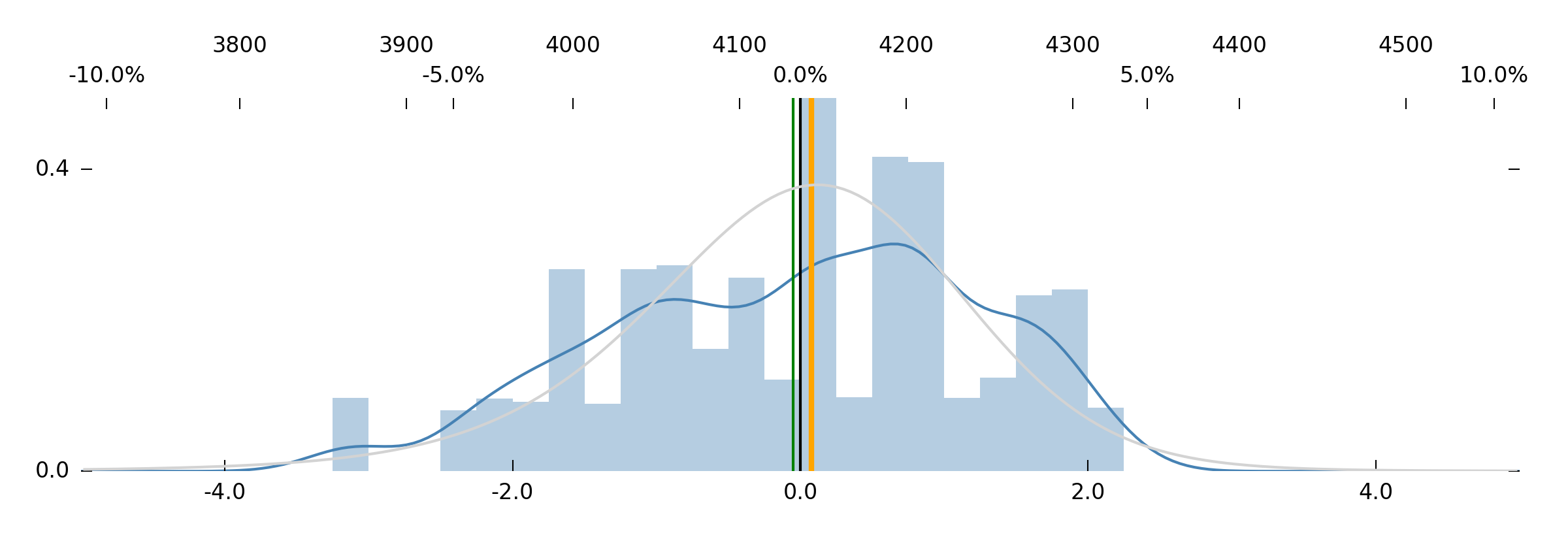
Gratifyingly, though, he's now agreeing that the "shoulders" of the distribution are underpriced. No, we aren't susceptible to tails, but he says that a "biggish" weekly move is underpriced. Say, ±4%. So, that's cool. Helps us a bit. But who cares about that robot anyway? Surely, our emotions are the arbiter of truth—and our emotions say, "booo S&P."
Partly, that's because the data just isn't great (DIX tells us people are bidding, but NPD, VGR, GEX+, etc. tell us that as soon as that bidding stops, the market is rather unstable). But also, our "Strategic" outlook, which is unchanged since the beginning of the year, is still in play. And that is to say—a lot of people have committed to "long bond" as the short-vol ballast of their portfolio at 4.50% yields, and it's only the seemingly stable return of that bond (a "short vol" allocation) that gives investors confidence to keep punting on SPX (a "long vol" allocation).
So, if bond returns come under pressure because people overestimated the whole un-flation thing, well, stocks will get hurt as the whole "40/60" portfolio suffers again. People stop punting real quick. And people have definitely gotten too comfortable with the idea that inflation is over with.
Regardless, anyone who's wishfully thinking that the S&P is in a bull market, for any reason, will get a rude awakening. 'Cause with the current composition of flows, it can't just keep drifting up. We're going to get some chop no matter what happens. Indeed, the higher-probability bet right now is simply to be long vol / gamma.
Now, since we have nothing more of substance to discuss, let's get back to talking about our emotions.
Science is Boring
We introduced the idea of the "Degenerate Science" a few weeks ago, and thus committed to trying a purely long-option strategy in 2023. The idea that such a thing is desirable is founded on the dramatic, and uncomfortable, findings of GOOSE—long options are objectively better for portfolio growth.
The problem, of course, is that these low-probability strategies are hard to gather data on, and may be impossible to gather data on. The strategy relies on "big wins," which are very occasional (or non-existent, depending on whether we actually have an edge).
This leaves us in a state of mind more akin to religious observance than scientific inquiry. We scan for what look like good opportunities to buy options, and we buy them. We hope that we have an edge.
When we deploy other types of strategies, even if we don't fully trust the backtests, we can collect data on transaction costs, market impact, alpha decay... we might consider the virtues of using midpoint dark pool orders to save on costs, and we wonder if it's desirable or possible to execute in illiquid hours. We then compare this data to the PnL of the strategy and consider whether we're barking up the right tree or not. In other words, we have a lot of feedback. If we're right, we ought to be making money.
But when a strategy relies on low-frequency data, inherently large transaction costs, and a very low win-rate like this one—that smart-quant process of in-sample forward-testing, or whatever you want to call it, doesn't really work. It's absurd to consider the "alpha-decay" of a degenerate option-buying strategy.
We can't quant our way out of this hole. We're dealing with untestability, unknowability. There is no feedback to prove or disprove our ideas—at least not on anything under a 1-year timeframe.
So we stolidly sit here and buy puts and calls, burn some incense, invoke Ken Griffin, and let most of the options expire worthless, with the faith that a couple of them will make a lot of money.
What a truly absurd thing to do.
For reasons that we do not (indeed, cannot!) understand, we've now "made" $2,162 YTD on tons of little long option bets. That is basically flat, portfolio-wise. Unchanged.
Is this... alpha? We may never know. We'll be dialing up the degeneracy soon. +$100k or bust! (Literally.)
Enjoy the week! Let's hope the index goes down.
The SqueezeMetrics Team