All the charts and data we refer to can be found on the Yacht Club page.
Hey everyone,
There were two parts to our 2024 annual forecast: What we wanted to do, and what we wanted the market to do. Since the former requires us to actually think hard and solve problems, let's continue to focus on the latter—about which we can simply spout pseudo-intellectual inanities and drive you, dear reader, to madness.
So let's do that. But first...
- T–5
- T+4
- The Gigabrain Macro Asset Forecast Bit (GMAFB)
T–5
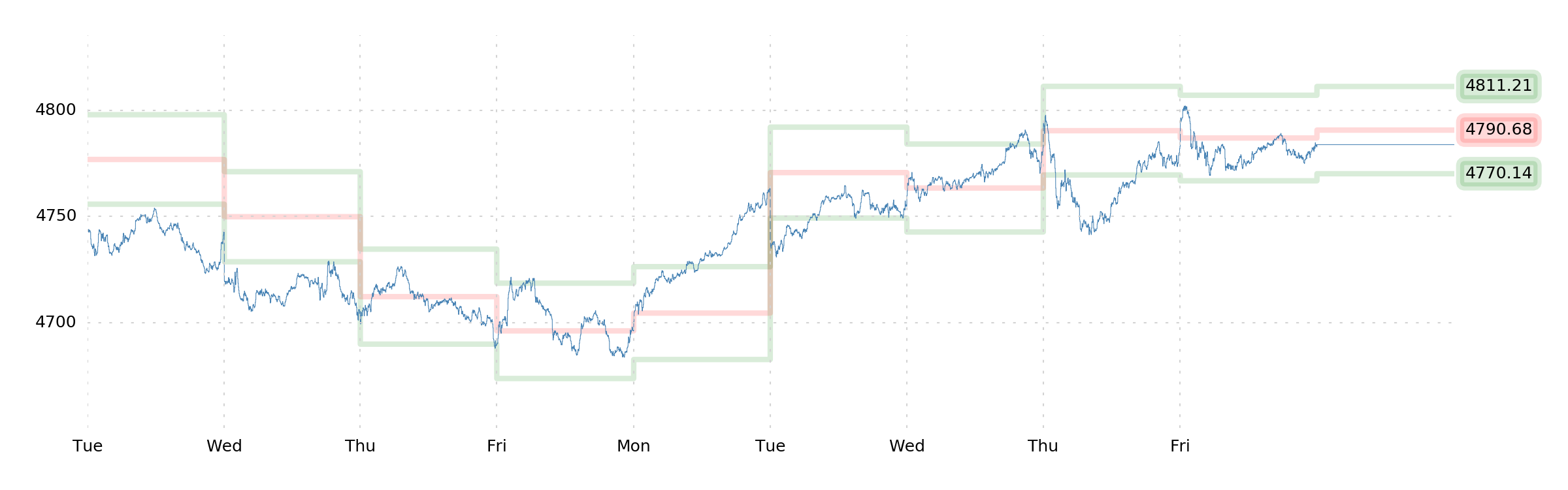
Last weekend, we said we thought the week would be all about mean-reversion and boring stuff. Despite the fact that we felt bearish, we didn't think that there could be sustained downside or any real reason to feel bearish—but then at the same time, we thought that a rally would "weaken and turn over."
Well, there was a rally, but it definitely didn't "weaken and turn over"—yet.
We were surprised by two things this week: First, the magnitude of Monday's rally—we had no particular reason to believe that'd happen, and it was big. Second, the magnitude of Thursday's intraday decline—we thought support would come sooner, since the 0DTE dealer hedging needs seemed like they'd provide that support. Neither the former nor the latter really hurt us (the latter was profitable, actually!), so we're not whining; we just mention it because, often, what surprises us about a week's price-action is the sort of stuff that needs to be addressed.
In this case, and in keeping with our bearish inclinations, we're just going to say that Monday's rally was silly, even in retrospect (yes, it appeared to be influenced by call-buying, but we're not sure that matters) and this in light of the week's flat bond returns (which, we maintain, have a positive causal relationship with stock returns right now), the index "deserves" to be lower (some dangerously loaded language there, but let's let it stand). This is also in keeping with our initial thoughts that the week was ripe for mean-reversion. Basically, everything is the same, and that means that instead of "more mean reversion," we automatically roll into next week with an actual bearish bias again.
There's someone who disagrees with us, though.
T+4
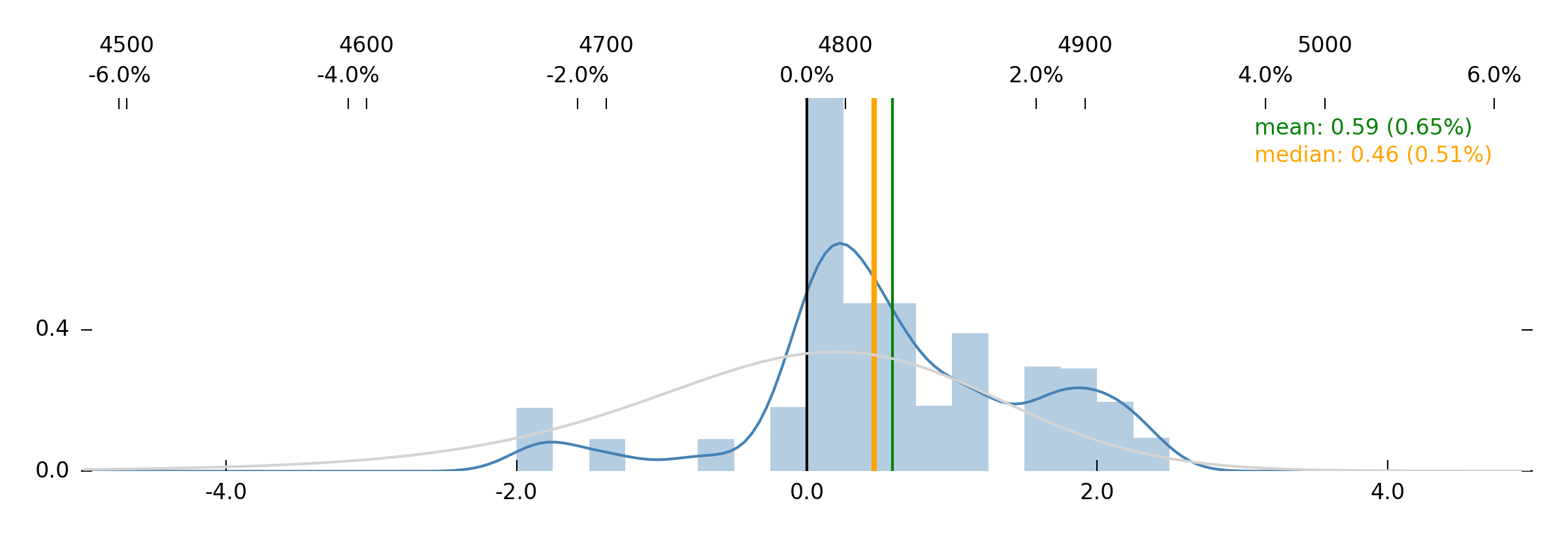
Look at what Robot Jim thinks!
An absolutely solid +0.6 MAD mean return forecast. The kind of distribution that makes you want to be long stocks and taking a vacation.
We've let Jim dissuade us many times over the past few months, but this will not be one of them. We remain bearish. Here are two reasons why:
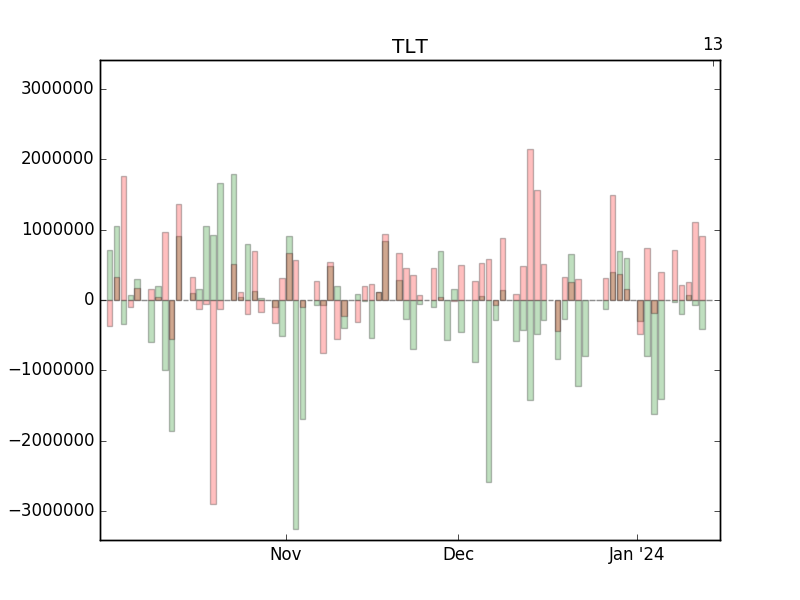
1. TLT option flows are lousy again
There were put-sellers all week, most especially Thursday and Friday. This is counterpoint to the [supportive] call-sellers from the week prior.
And so while we felt that TLT would have support this past week, from the prior week's call sales—we now feel that TLT will lose that support, owing to the gobs of Thursday and Friday sold puts.
And in case you care, the CFTC CoT data for bonds isn't good yet, Jim is neutral TLT, and momentum is shifting down for TLT again. So, there's nothing else providing support, in our ménage of bond indicators.
We still, implicitly, expect bond downside to manifest S&P downside.
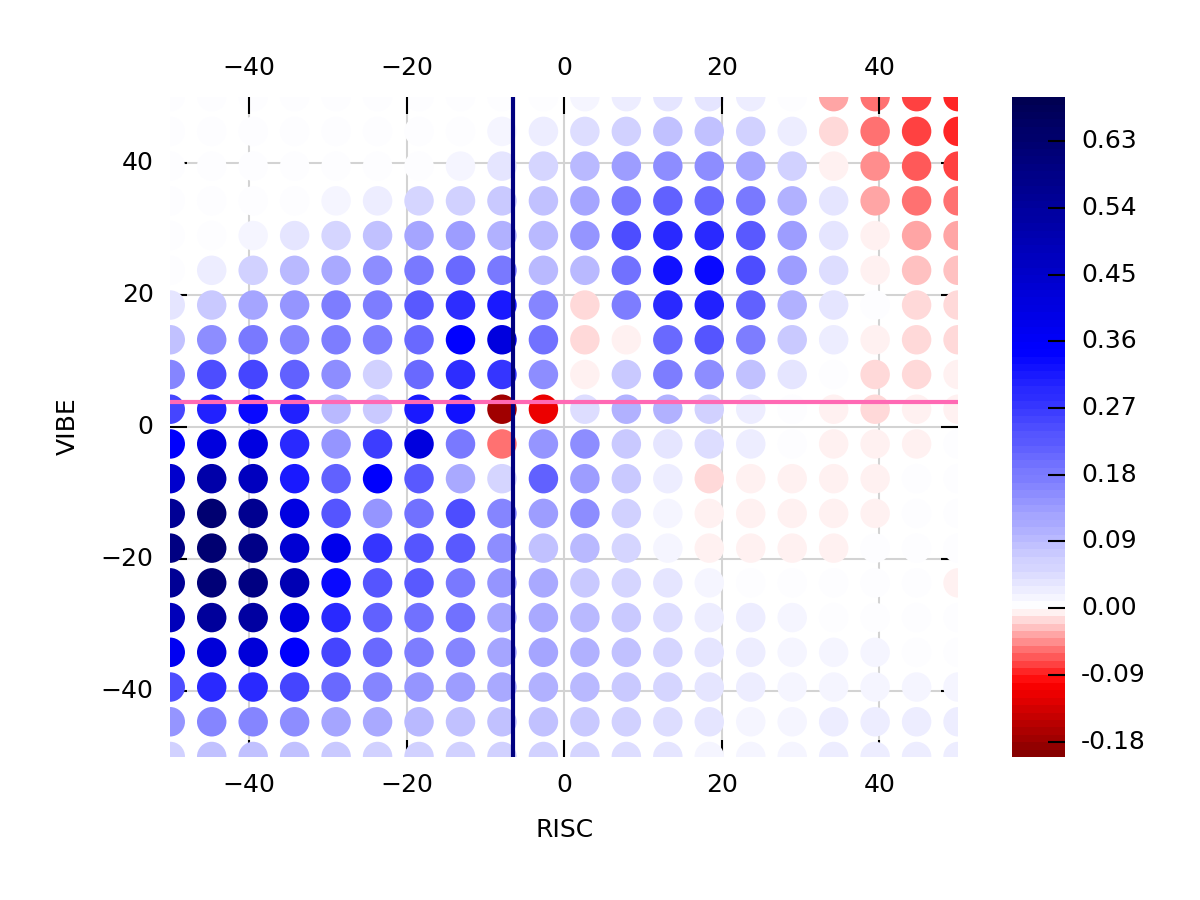
2. RISC-VIBE is still in the drain
The tell-tale sign of "late-stage rally" first started right at the end of the year, when we bought SPX puts. It then wiggled around a bit more (as SPX fell), and is now back in the red.
It means that that past month of realized volatility has been only a bit lower than implied (RISC slightly negative), and that the realized skew of the past month has been neutral (VIBE slightly positive), indicating the dominance of neither bullish nor bearish flows, neither bullish nor bearish sentiment. This is "stagnation" in both option positioning and flows—and both of the times that we've called attention to this so far, it's immediately preceded S&P downside.
And so, we will be buying SPX puts again. Right now.
Now let's spout our pseudo-intellectual inanities for a minute before signing off. Feel free to roll your eyes and ignore if you've already heard enough macro nonsense this year.
GMAFB
We had a weird little thought inserted into our January 1st forecast, which we did not qualify, but which, if it is to be stated at all, deserves qualification. Here's that weird little thought:
And then from a Gigabrain Macro perspective, we're suspicious that, once again, folks are offsides on inflation, and have "declared victory" against transitory inflation (again) too early. This encourages the "bonds go back down" thesis, of course. And while we, historically, have not been critical of the Fed (it is what it is), it really does seem like the Fed is not truly capable of tightening financial conditions by raising rates (and we would argue that inflation was not at all quelled by Fed intervention, but if anything, entrenched). As a result, more inflation seems more likely. The market completely disagrees with this at present, which makes it all the more appealing as a bet.
We're saying, here, that the Fed is not even capable of tightening financial conditions by raising rates. That's quite a thing to say, and it's not the sort of thing that we generally say, but then, here we are, saying it. Mind you, this isn't meant to be "clever," or "cute," and we're not sharing this to seem fancy, talking about The Economy, because it isn't even our idea. Rather this is just something that we've picked up from listening to smart people (which we try to do on occasion). So, with all those those warnings and disclaimers out of the way—here's why we're saying these nasty thing about the Fed:
The conventional concept of "raising rates acts as a brake on the economy" is based on the premise that the higher cost of getting money lowers demand for credit and stalls business investment. If you want to borrow, you ultimately borrow from someone (commercial bank) who's posting cash collateral (reserves) in a fractional reserve banking system and borrowing, at the end of the line, from the Fed at the Fed's discount rate. In any case, to create credit, that lender must post cash collateral, which earns 0% interest.
That 0%-interest-bearing collateral is a massive opportunity cost to the bank (itself not a high-margin business), and that is doubly, trebly costly as rates go up in an inflationary environment—because posting dollars at 0% means losing a lot of money as dollars lose value at, say, 5% to 8% per year. (Those dollars could be making a lot more money in short-term debt.) And so, again, conventionally, the bank must incur additional costs, widen spreads, and reduce liquidity across its entire business in order to make up for that cost.
That's how financial conditions are "tightened" by rate hikes, historically. And that's how raising rates "brakes" the economy—through the imposition of massive opportunity costs to lenders in a fractional reserve system, which are inevitably passed along to borrowers and would-be borrowers. The effect is quick, tangible, and generally quite visible in yield curve inversions (which, you'll note, tend not to last very long!). Historically, it's very effective. Everyone seems to know this.
But what happens if we not only did away with reserve requirements completely (2020), but also paid banks, at some mere 10bps below the discount rate, for parking any excess cash with the Fed (2008)? In this situation, will banks have to pass on to lenders the cost of holding reserves at 0%? No, because they won't be holding reserves at all if they don't want to, and the reserves that they do hold will be getting paid out at 5.40% (while the discount window costs 5.50%). No costs have to be passed on to borrowers at all!
So, when the Fed hikes rates, should we expect that to "tighten financial conditions," and to "brake the economy" in the traditional sense? No. As a policy tool, rate hikes absolutely won't work like they're "supposed" to, and to the extent that they "work" at all, we should expect it to be an extremely lagged-and-variable wealth effect, whereby, quite literally, we're counting on the loss of wealth from bond losses and higher rates elsewhere in the economy to influence subsequent risk-taking and lending behavior. Very, very hand-wavey stuff.
Does that make sense so far? We like this rate-hikes-don't-work-anymore explanation because it's interesting, and because it explains why inflation hasn't been "transitory," despite every sane and well-informed econ nerd arguing that the inflationary impulse beginning in late 2021 was obviously brought about by temporary forces and would obviously end as those forces wound down. And yet, here we are, over two years later, still unsure of whether inflation has been quelled, and still waiting for the Fed's first rate cut.
What happens if we extend the above explanation to today? What if we assume that, as explained, the Fed can't "brake" the economy or stifle inflation while requiring no reserves and while paying banks the policy rate to do nothing? What's probably going on right now? Inflation, of course!
Why? Because
what's currently being paid on bank reserves is 5.40%, and unless you believe that there are other forces which will overwhelm that fact, then the rate of inflation will be,
ceteris paribus, somewhere in the vicinity of 5.40%—the rigidly, top-down, dictated rate for the hardest, most central, and most liquid money in the world. The Fed has, in a sense,
established inflation by paying [extremely high] interest on reserves.
In the past, a Fed target funds rate of 5.25/5.50 meant that everyone who borrowed would somehow have to make up the difference between [getting paid] 0% and [paying] the discount rate of 5.50%, because the Fed wasn't going to pay you 5.40% (why would they?!) for doing nothing. Today, no such sacrifice needs be made. Today, in a bid to acquire even more control over rates through interest-on-reserves (and, let's be clear, that worked as intended), the Fed appears to have lost a policy lever, and, perhaps, opened a box of unintended consequences.
All other things being equal, this should mean that inflation is now stuck where the Fed commanded it to be—at the imposed discount rate, where there is perfect liquidity for money to be borrowed and lent in any amount, with no frictions. And any subsequent attempt at raising rates further to combat inflation will, indeed, either do nothing at all, or entrench inflation further by setting the new ultimate, global, ultra-liquid, money-clearing rate even higher.
With this interpretation, you could perhaps understand why inflation has, so far, been very sticky. You may also understand why a bet on higher rates of inflation isn't crazy. But what we're not quite sure we understand is what happens in the event that the Fed actually cuts rates (like the market is predicting). Wouldn't that actually be... deflationary?
If you are steeped in the polite observances of modern economics, this all probably sounds farcically smooth-brained or unacceptably heterodox. That is precisely why it seems worthy of mention—because at this juncture, this "model" of thinking may actually prove more useful for forecasting, and even if it doesn't, at least it's distinct from the very vanilla "cut cycle," and "soft landing" stuff that the market appears to be pricing in, and about which the discussion still seems to be centered. We wonder if everyone is asking all the wrong questions
Where this comes back to reality is that, once again, we see even more clearly the risk of more, "unexpected" inflation, and a longer inflationary regime. And that just wouldn't be good for bonds. And right now, that probably just wouldn't be good for anyone.
It's a bear market, you know.
Sorry. No more subjective macro-econ garbage next weekend.
Enjoy the week!
The SqueezeMetrics Team