All the charts and data we refer to can be found on the Yacht Club page.
Hey everyone,
Last weekend, we said this:
We'll let you know exactly how much money we lose.
Two thousand two hundred dollars. Money that could have otherwise been spent on car payments, or investments, or eggs. So yeah, we bought some OTM calls and puts on some stuff in an account specifically dedicated to buying options (to see if we can psychologically withstand the process)—and we lost money. Among other things, this included calls on NVAX, which was a ticker we liked from last weekend. No dice.
And this has nothing to do with our losses in SPX puts! Which are, of course, larger.
So, how does it feel to be a loser? How much money can we lose before we start feeling like all we're doing is crowdfunding Ken Griffin's next yacht?
Let's talk more about losing money—but first...
- Right in the puts
- Not as springy
- Yachts and dinghies
Right in the puts
The thesis was that NPD moving toward zero would give rise to some volatility. And it did!
But only a little over 100 points' worth.
Our bet was on something more dramatic, of course.
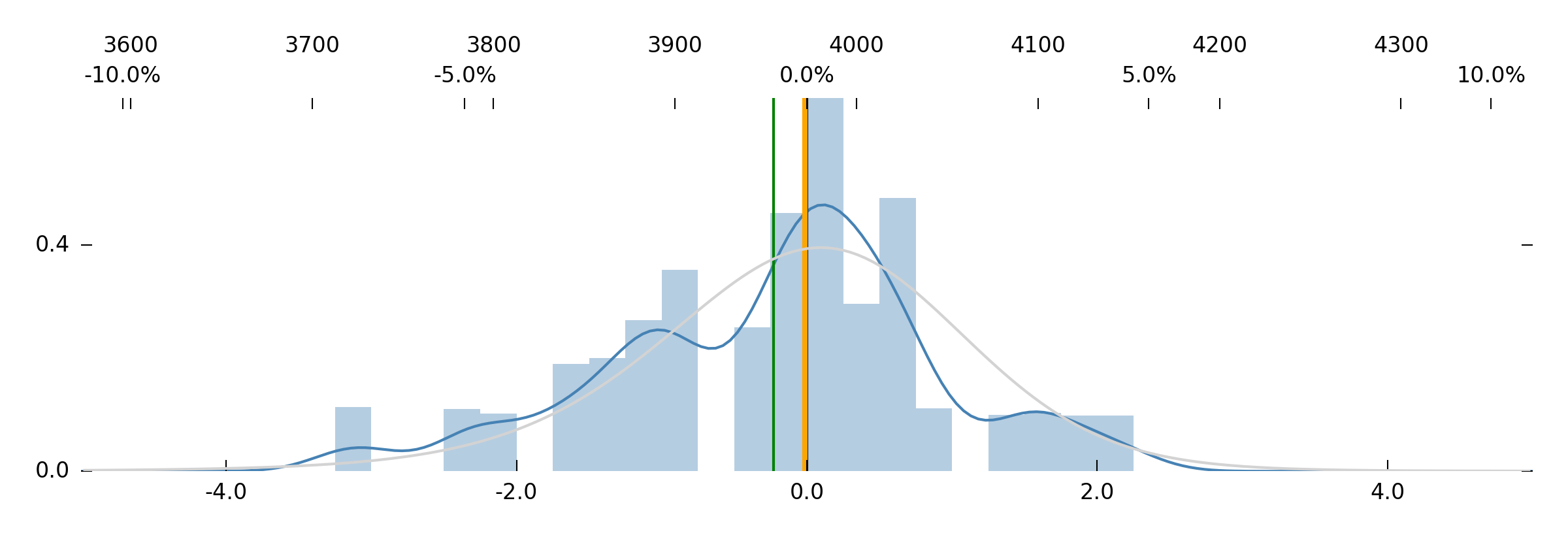
In simpler terms, Robot Jim is telling us that betting on a move below SPX 3850, or above SPX 4100, is a good idea—despite it being a low-probability bet. Cool, cool. That's pretty much what we were hoping for.
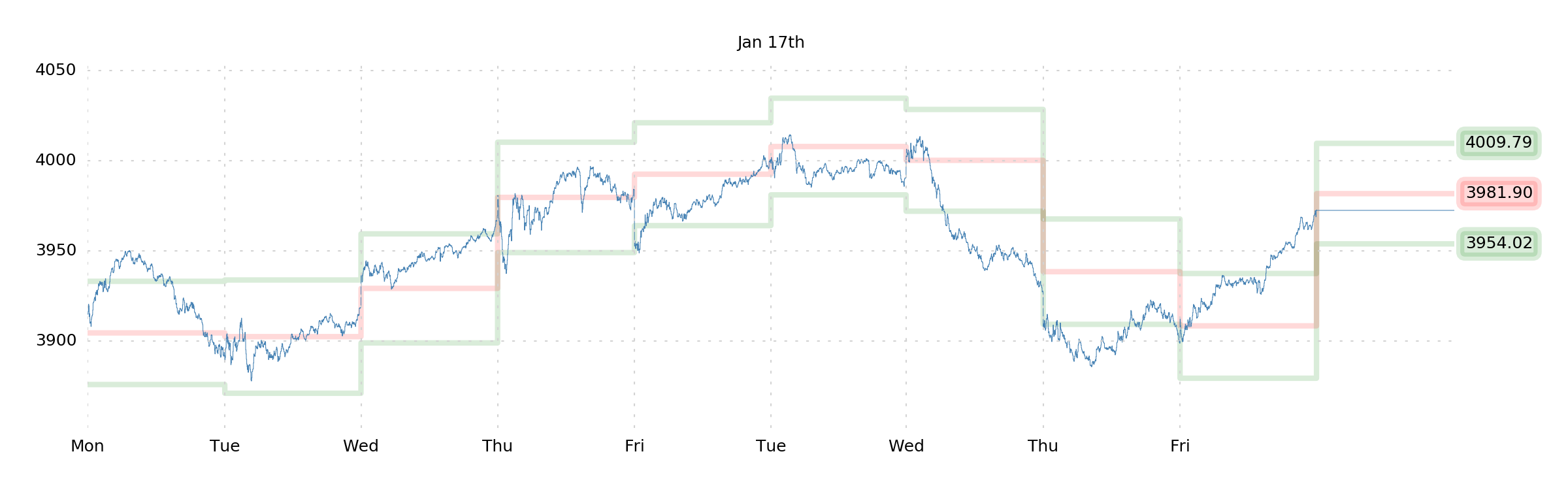
And this goes back to the same theme that we've made central to 2023: You could have been purely long gamma (hedging deltas) and done pretty well this past week (three out of four days moved well outside of the SuMo bands!), or you could take a big swing (and a miss) at movement below 3850, which what we did. We can only be mad at ourselves.
We were, meanwhile, suitably impressed at how well the 0DTE dealer hedging needs were descriptive of what was going on during the week; and we were chuffed that Robot Jim warned us about the high probability of a rally after Thursday. In fact, he totally nailed it. As we said on Friday morning:
The best bet, in terms of probability, is 50 points of upside.
Is there something to be said for pecuniary poverty, but intellectual wealth? (No.)
Anyway...
Not as springy
Some excitement has definitely been siphoned off already. Jim's distribution looks like this:
Whereas we saw some edge, at the beginning of last week, in betting on some choppiness; we see nothing here.
Yes, Jim favors downside, with a mean below zero—and that's notable, in a way—but the shape of the distribution is rather conventional, and matches the market's expectations fairly closely.
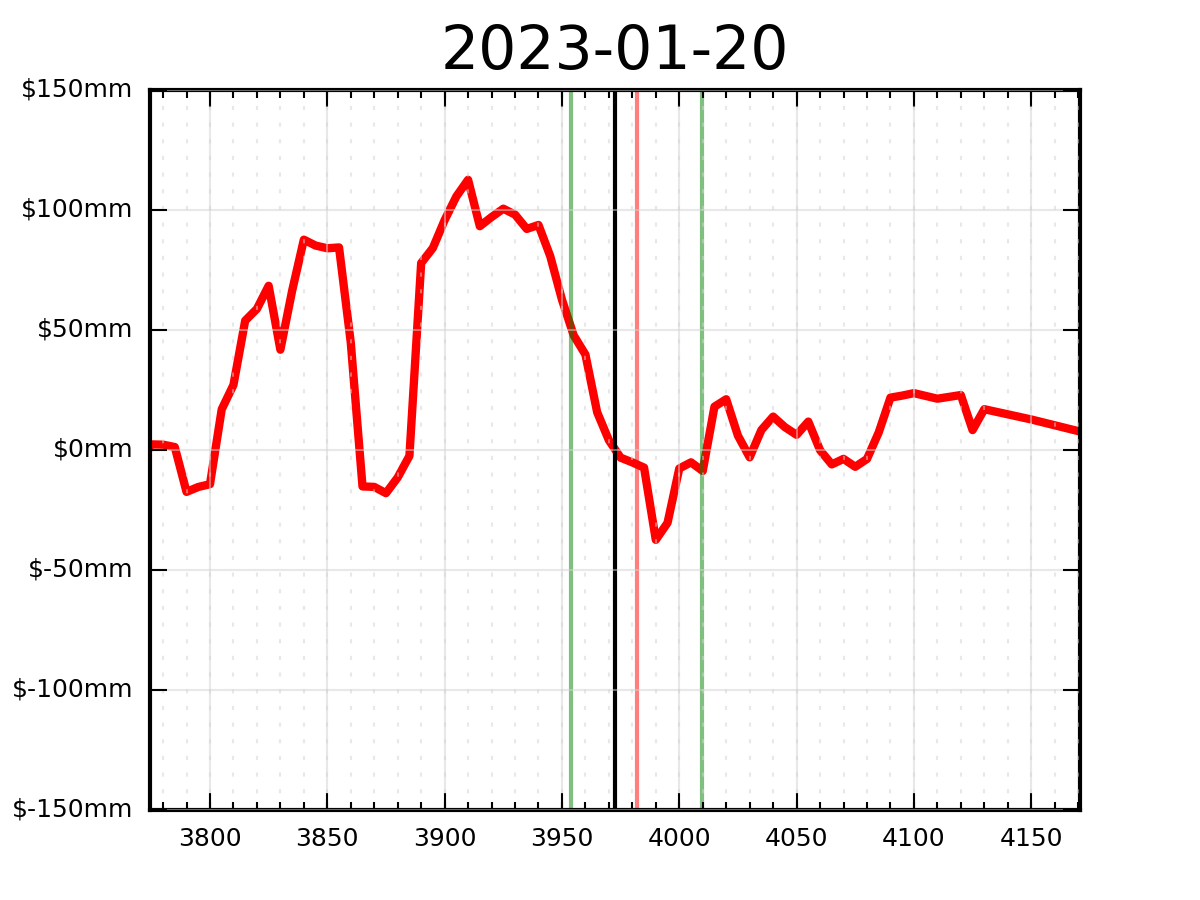
A brief glance through the PDFs and you'll note that Friday featured an NPD of +6.28, and that a whole ton of those sold puts were 0DTE and 1DTE. That means that there are a lot of sold puts expiring tomorrow (Monday), and, as you might expect, you can see the impact of those puts on the 0DTE dealer hedging plot.
On its own, we think this looks a tiny bit bearish (which nicely matches Jim's thoughts). There's a ton of buying that would occur on the way down ($50mm by the time you hit the SuMo Support band), and there's selling on the way up. Historically, this leads to something like an average of –0.10% next-day returns. The way we tend to think about this is that the downside is "stable," but the presence of tons of liquidity below spot is actually attractive (in the same way that sold option strikes [dealer long gamma] are usually attractive).
(It is worth noting, though, that there's a small probability of these folks getting rolled over, so if there's some bad news tomorrow, these put-sellers could scatter quickly, cut losses, and spike vols.)
We have to wait until mid-February for the next CPI print, but we wonder if fears of a hotter-than-desired print will start brewing soon. In our estimation (from asking smarter people), bonds are "pricing in" the continuation of the Disinflation Narrative, and, if you recall, our thought is that stocks can't really stand up to bonds going down (because investors are using long bond as ballast right now, and are treating SPX more speculatively).
So for now, the thought is still "bear market dynamics," like downside drift; but without a great opportunity to be long puts. That can change quickly. We'll be continuing to watch NPD closely.
Yachts and dinghies
You may have heard the old Chicagoan expression,
Buy teenies, drive Lamborghinis.
You may have also heard it the other way 'round. I.e., "Sell teenies, drive Lamborghinis." Maybe one of the hoary old CBOE/AMEX floor traders who receives this missive can let us know which came first, and how cynically we ought to receive the wisdom in the first place.
In any case, we're keen on the idea of buying those cheap options, and as we spent more time on GOOSE, we became convinced that a halfway-intelligent long-option strategy has an advantage simply by virtue of being long vol, and serendipitiously open to really big risk-adjusted portfolio gains.
For the time being, we've resolved to very deliberately search for opportunities that we like, using a mix of quantitative screening and qualitative analysis. This, we think, is using our data the way it's meant to be used.
How do we feel about this so far? Well, we lost money, which should happen, oh, nine out of ten times we make a bet like this; so that's not a surprise. But regardless, it already feels like one would need some very thick skin to commit to the bit and "be long vol" all the time. And after a couple of abortive efforts, we're not even sure it's possible or sensible to backtest something like this—even with a "pure" quantitative approach.
It's almost silly to even keep talking about this. Either it turns out that we can succeed as little, long-convexity bottom-feeders (psychologically and financially), or we end up another plundered dinghy in Ken Griffin's wake—funding his hilariously lavish lifestyle (and his mom's new mansion). We'll have to wait and see.
...
Speaking of yachts, though, let's try talking about one more punt, just to dissect the sorts of things to look for in a long vol trade.
Mastercraft Boat Holdings, Inc. (
MCFT) makes boats. We don't care about that, it's just funny. What we care about is that there are patterns in its data that we've found interesting, upon screening for them.
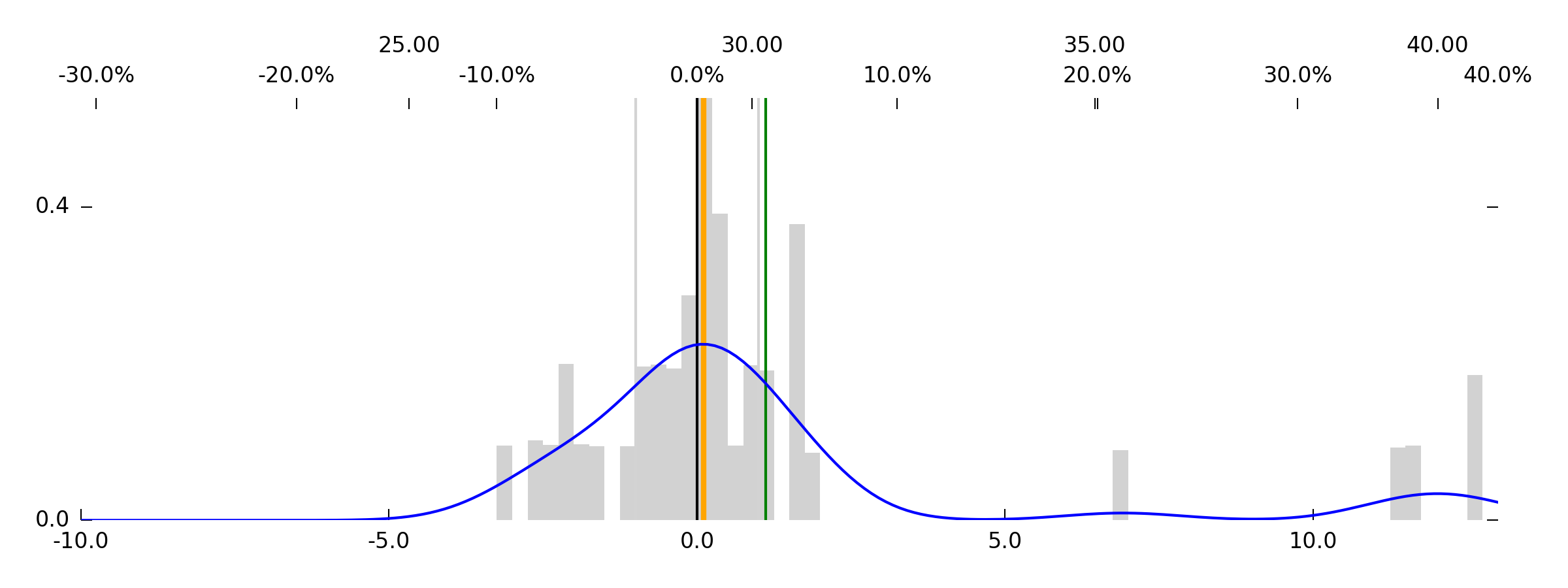
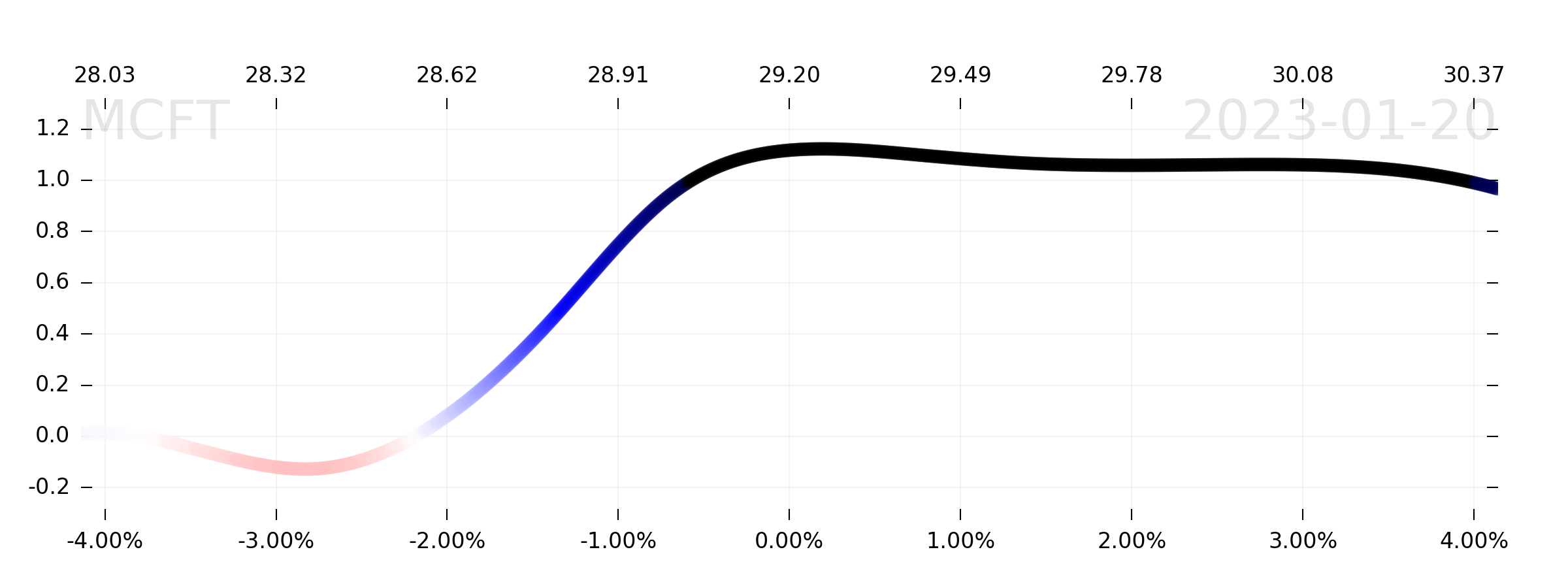
So, here's the current distribution, as seen by Robot Jim. This is a 1-week forecast.
A massive right tail. Upon further investigation, it looks like MCFT's historical right-tail events were associated with earnings events, and, well, the next earnings event is in two-and-a-half weeks! Is that worth something?
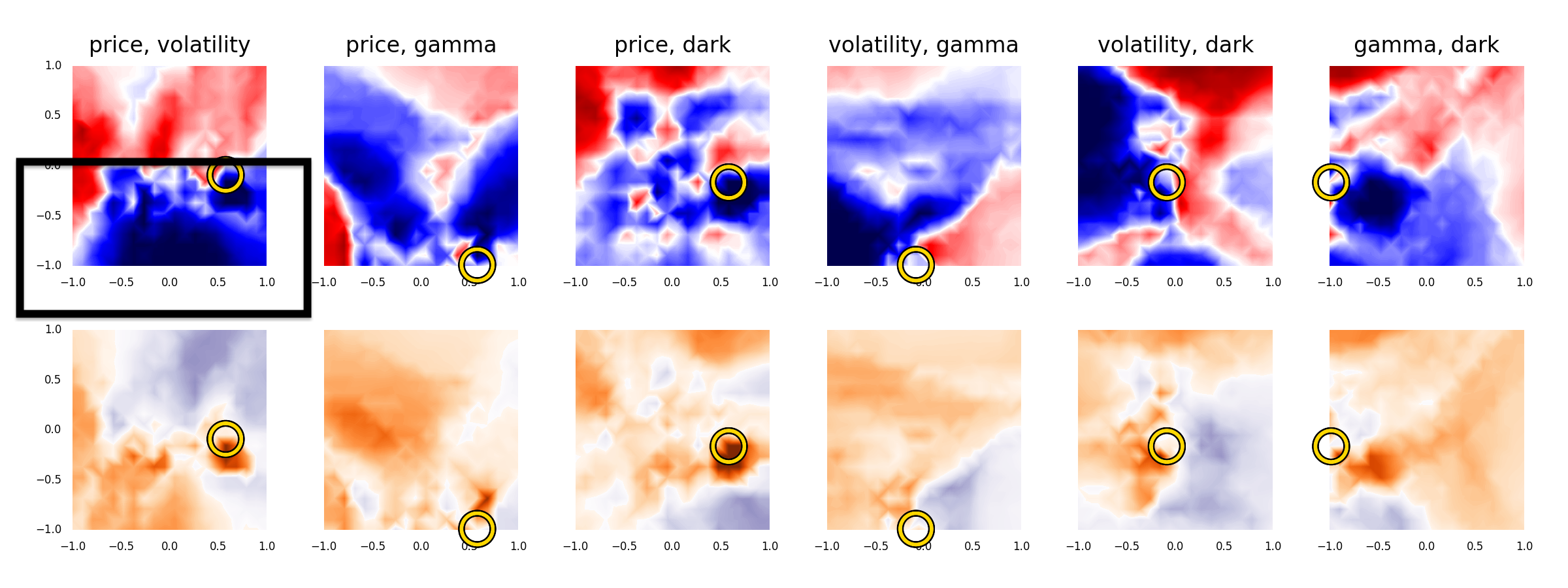
Well, it might not be worth anything on its own, but there's also a very clear and interesting tendency in MCFT's price-volatility map. See it? Check out the area indicated on the "price, volatility" map.
Yes, volatility (on the y-axis of that map) dominates the way MCFT trades on a 1-week timeframe. When the gold circle is on the lower half of the "price, volatility" weather map (i.e., falling volatility), that's bullish; when the gold circle is on the upper half (i.e., rising volatility), that's bearish.
In other words, the stock has positive returns when the sailing gets smooth. This isn't uncommon, especially among smaller stocks with less index correlation and less drift. These stocks trade with their own characteristics, and in MCFT, short-term returns are very vol-sensitive.
What does this mean for us? Well, there are listed February calls (expiring post-earnings) at a perfectly reasonable IV (if you know how to go fishing at mid) that would stand to gain in one of two scenarios:
- Stock drifts up on low vol.
- Stock beats earnings and reacts well.
There is a lot of precedent to believe in having some edge with either, or both, scenarios. And if we take a peek at Jim's forecast-of-a-forecast (the step-forward), we see that gains beget further gains.
I.e., if the stock goes up tomorrow, its forecast will stay just as good (+1 MAD).
The eternal question: If we find enough opportunities like this, do we win out in the end? As we sit here and bleed chips, we increasingly believe that this type of trade is a matter of faith, and that one would need to very strongly believe in the dogma of GOOSE to stick with it.
Rest assured that we will update you, dear reader, on this emotional rollercoaster. But let's maybe find something more fun to talk about next weekend, in the meantime.
Enjoy the week!
The SqueezeMetrics Team